The Terminal Setup That Doubled My Productivity: Zsh, Tmux, and Neovim in 2026
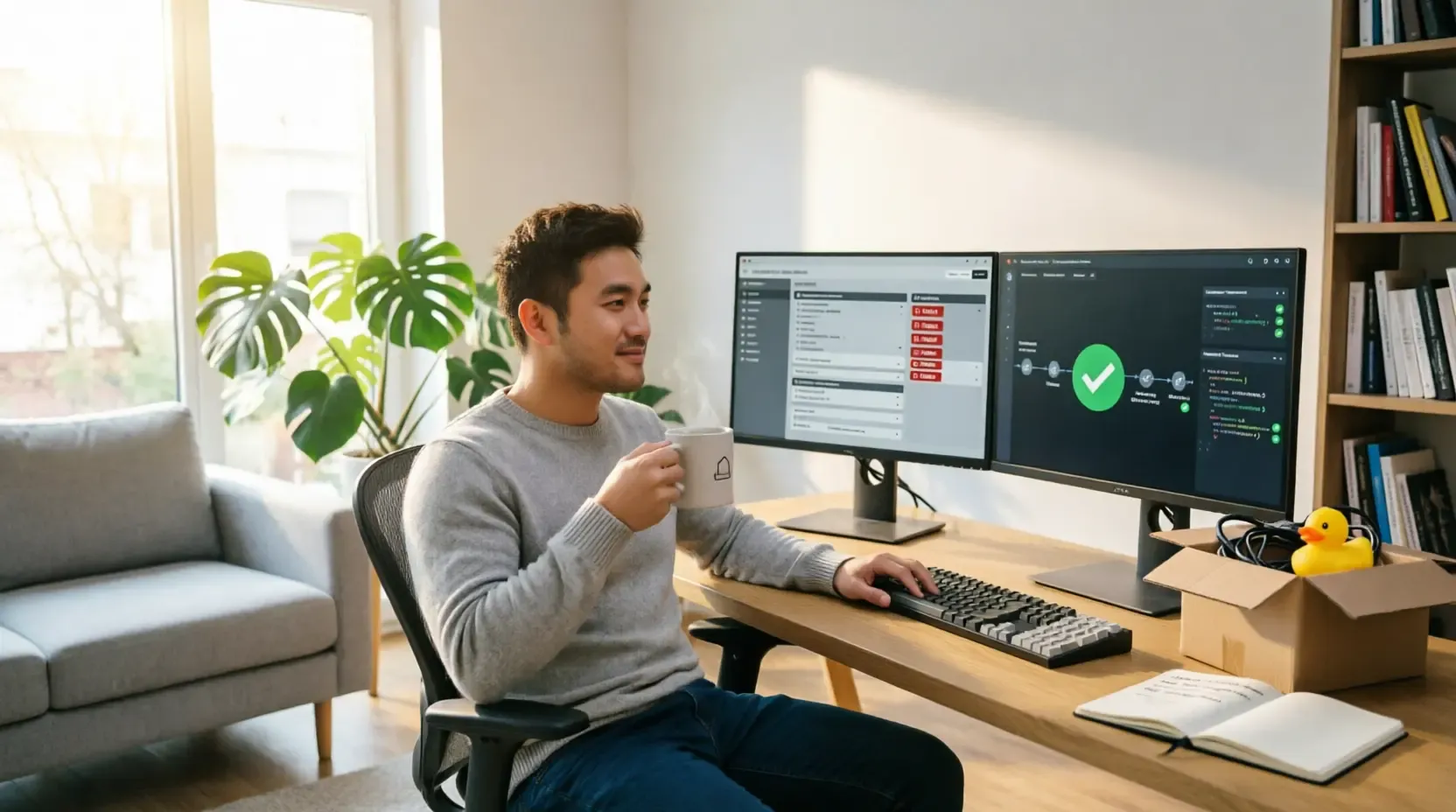
I used to lose an embarrassing amount of time every day just moving between windows. Switch to the browser to check docs. Switch to the IDE. Switch to a separate terminal to run tests. Switch back. Find my place again. None of that switching felt like "work," but it added up to hours of lost focus every week.
Six months ago I rebuilt my entire development environment around three tools: Zsh, Tmux, and Neovim. No mouse, no window manager juggling, everything inside one terminal. My honest estimate is that it doubled my output — not because I type faster, but because I stopped breaking my own concentration.
This is the exact setup, why each piece matters, and how to build it yourself without losing a weekend to configuration hell.
Why a Terminal-Centric Workflow Still Wins in 2026
Despite years of predictions that IDEs and cloud-based editors would make the terminal obsolete, keyboard-driven terminal workflows have only gotten more popular among experienced developers. A few reasons this trend has held up:
- Speed compounds. Saving two seconds per action, a hundred times a day, is more valuable than any single "big" productivity hack.
- Remote work normalized SSH-first development. A workflow that runs identically on a laptop, a cloud VM, or a Raspberry Pi is a real advantage.
- Modern terminal tools closed the usability gap. Neovim's LSP support, Tmux's session persistence, and Zsh's plugin ecosystem now rival full GUI IDEs for most day-to-day coding.
- Fewer context switches, less cognitive load. Staying inside one application, one set of keybindings, and one mental model reduces the "where was I?" tax that kills deep work.
The Three Pillars of the Setup
1. Zsh — The Shell That Does the Small Things Right
Zsh itself isn't magic. The value comes from a handful of plugins that remove friction from everyday commands.
Core plugin stack:
- Zsh with a minimal framework (Zinit, Antidote, or Prezto — avoid heavier frameworks that slow down shell startup)
- zsh-autosuggestions — suggests completions from your history as you type
- zsh-syntax-highlighting — flags invalid commands before you hit enter
- fzf integration — fuzzy search through history, files, and directories
- zoxide — a smarter
cdthat learns your most-used directories
A minimal .zshrc snippet that captures the essentials:
bash
# Plugin manager (example: zinit)source ~/.zinit/bin/zinit.zshzinit light zsh-users/zsh-autosuggestionszinit light zsh-users/zsh-syntax-highlightingzinit light Aloxaf/fzf-tab# Smarter navigationeval "$(zoxide init zsh)"# Fuzzy history search bound to Ctrl+Rbindkey '^R' fzf-history-widget
Why it matters for productivity: command-line friction is death by a thousand cuts. Autosuggestions alone can save several keystrokes on nearly every command you type in a session.
2. Tmux — Sessions That Never Die
Tmux is the piece most people underestimate. It's not just "terminal splitting" — it's persistent, named workspaces that survive SSH disconnects, laptop sleep, and crashed terminal apps.
The workflow that changed things for me:
- One Tmux session per project, named after the repo
- A standard pane layout: editor on the left, test runner top-right, shell bottom-right
- Session persistence via the tmux-resurrect and tmux-continuum plugins, so reopening my laptop drops me exactly where I left off
Example .tmux.conf highlights:
bash
# Use Ctrl+a as prefix (easier reach than Ctrl+b)set -g prefix C-aunbind C-bbind C-a send-prefix# Vim-style pane navigationbind h select-pane -Lbind j select-pane -Dbind k select-pane -Ubind l select-pane -R# Persist sessions across rebootsset -g @plugin 'tmux-plugins/tmux-resurrect'set -g @plugin 'tmux-plugins/tmux-continuum'set -g @continuum-restore 'on'
Why it matters for productivity: the real win isn't split panes — it's never re-establishing context. Every project has its own named session with the right panes already open, so switching projects is one command: tmux attach -t project-name.
Comparing Terminal Multiplexers
Tmux isn't the only option, and it's worth knowing the alternatives before committing.
FeatureTmuxZellijGNU Screen
Config language
Custom .conf
KDL / YAML-like
Custom .conf
Session persistence
Via plugin (resurrect)
Built-in
Limited
Default keybindings
Minimal, unopinionated
Discoverable UI hints
Minimal
Plugin ecosystem
Large, mature
Growing
Small
Learning curve
Moderate
Low
Moderate
Best for
Customization, scripting
Newcomers who want sane defaults
Legacy systems
Tmux wins for this setup because of its plugin maturity and near-universal availability on remote servers — a meaningful advantage if you SSH into different machines regularly.
3. Neovim — An Editor That Moves at the Speed of Thought
Neovim in 2026 isn't the intimidating, plugin-fragile Vim of a decade ago. With a modern config built on Lua and the built-in LSP client, it delivers IDE-grade features — autocomplete, diagnostics, go-to-definition, inline errors — without the startup lag of Electron-based editors.
Essential plugins:
- nvim-lspconfig — native language server support
- nvim-cmp — autocompletion engine
- telescope.nvim — fuzzy finder for files, text, and git status
- treesitter — accurate syntax highlighting and code folding
- gitsigns.nvim — inline git blame and diff markers
- which-key.nvim — a cheat sheet overlay so you never forget a keybinding
A trimmed example using lazy.nvim as the plugin manager:
lua
require("lazy").setup({ { "neovim/nvim-lspconfig" }, { "hrsh7th/nvim-cmp" }, { "nvim-telescope/telescope.nvim", dependencies = { "nvim-lua/plenary.nvim" } }, { "nvim-treesitter/nvim-treesitter", build = ":TSUpdate" }, { "lewis6991/gitsigns.nvim" }, { "folke/which-key.nvim" },})
Why it matters for productivity: Neovim starts in milliseconds, works identically over SSH, and keeps your hands on the home row. Once muscle memory kicks in for motions like ciw (change inner word) or dap (delete a paragraph), editing text becomes noticeably faster than mouse-driven selection.
Putting It All Together: A Real Workflow
Here's what a typical coding session looks like with this stack:
- Open a terminal, type
tmux attach -t my-project(or it auto-restores on boot) - Left pane: Neovim is already open with LSP diagnostics active
- Bottom-right pane: test suite running in watch mode
- Top-right pane: git status and quick shell commands
- Need to check something in another repo?
Ctrl+athen a session switch — no new window, no lost state - Fuzzy-find any file across the whole project with Telescope in under a second
No mouse. No app-switching. No "where did I put that browser tab." Just one continuous, keyboard-driven flow.
Common Pitfalls When Building This Setup
- Over-plugin-ing on day one. Start with 5–6 plugins, not 40. A bloated config slows startup and makes debugging painful.
- Skipping a dotfiles repo. Keep your
.zshrc,.tmux.conf, and Neovim config in a version-controlled dotfiles repository so you can reproduce the setup on any machine in minutes. - Ignoring keybinding conflicts. Tmux's prefix key and Neovim's leader key can collide with terminal emulator shortcuts — test on your actual terminal app before committing to a layout.
- Not measuring the payoff. The biggest productivity gains here compound over months, not days. Give any new keybinding at least two weeks before deciding if it stuck.
Is This Setup Right for You?
This workflow shines for people who work primarily in the terminal already — backend developers, DevOps engineers, and anyone who SSHes into remote machines regularly. If your work is heavily GUI-dependent (design tools, GUI debugging, visual diffing), a hybrid approach — Neovim inside a GUI terminal app, alongside your existing tools — will get you most of the benefit without a full workflow overhaul.
Final Thoughts
The productivity gain here isn't from any single trick — it's from removing friction everywhere at once. Zsh removes typing friction. Tmux removes context-switching friction. Neovim removes editing friction. Individually each saves seconds. Together, over a full day of work, they add up to hours.
If you're going to try one piece first, start with Tmux session persistence — it's the single change that had the biggest impact on how it felt to work, because you stop losing your place every time you close a laptop lid.