Code Reviews That Don't Suck: A Practical Guide for Teams That Actually Ship
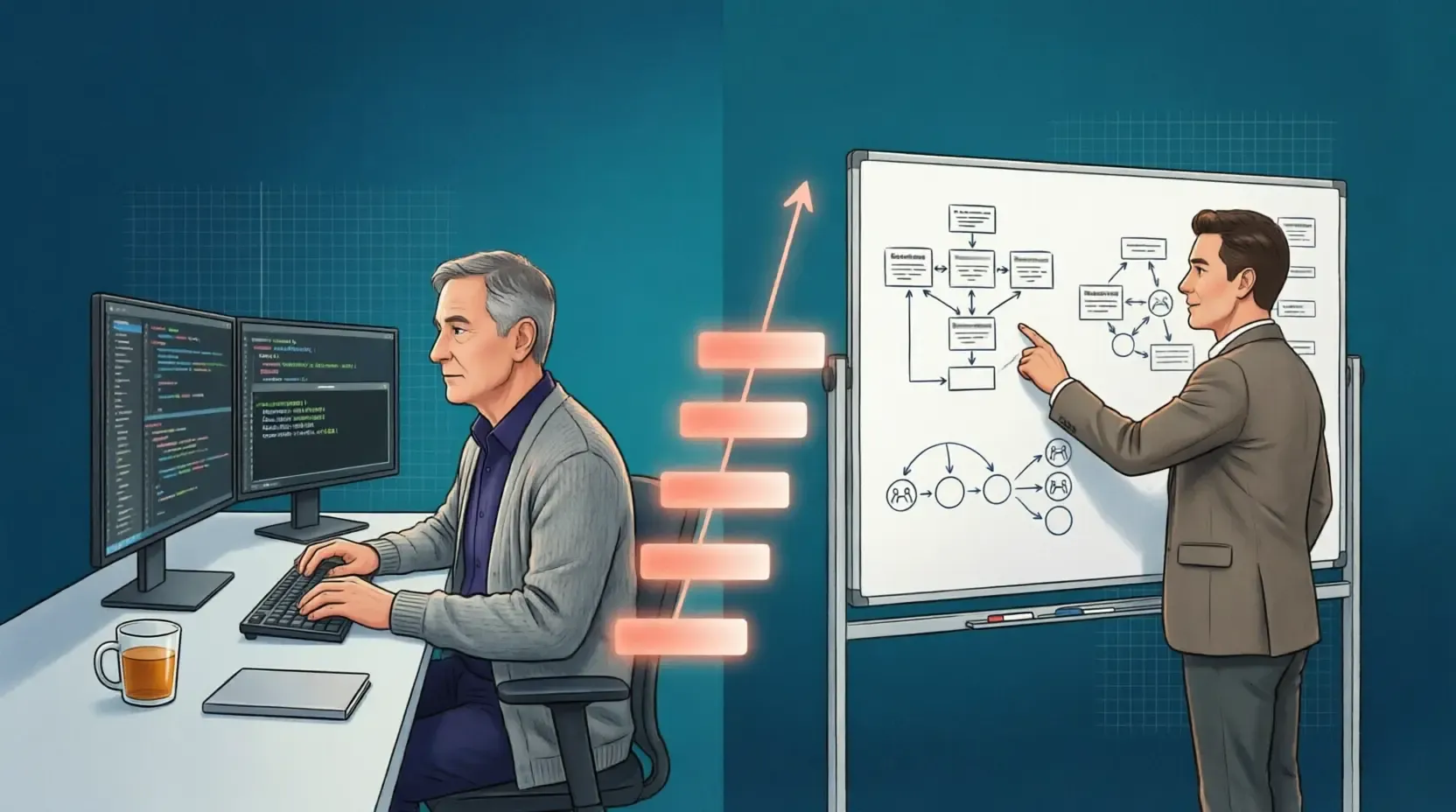
Every engineering team says code review matters. Almost none of them enjoy it.
Pull requests pile up for days. Reviewers leave a single "LGTM" without reading past the diff summary. Or worse — someone leaves twelve nitpicky comments about variable names while a genuine bug sails through untouched. Somewhere between "no review at all" and "review as a bureaucratic gate," most teams lose the thread.
This guide is about finding that middle ground: a code review process that catches real problems, respects people's time, and doesn't become the reason your team ships slower than the competition.
Why Most Code Review Processes Fail
Before fixing anything, it helps to name what's actually broken. Most bad code review cultures fall into one of two failure modes.
The rubber stamp. Reviews exist on paper but not in practice. People approve PRs they haven't really read because they're busy, because the author is senior and "probably knows what they're doing," or because the team has silently agreed that review is a formality standing between code and merge.
The bottleneck. The opposite problem — review becomes a gauntlet. PRs sit for days waiting on a specific senior engineer. Reviewers leave scattered comments across multiple rounds instead of one thorough pass. Style debates eat more time than the actual bug-hunting.
Neither extreme protects code quality. The rubber stamp lets bugs and bad design decisions through. The bottleneck slows delivery so much that people start avoiding small, frequent commits in favor of giant PRs — which then take even longer to review, in a vicious cycle.
Principle 1: Keep Pull Requests Small
This is the single highest-leverage change most teams can make, and it's not really about the review process at all — it's about how work gets broken down before a PR is ever opened.
A PR with 40 lines changed gets a careful, thoughtful review in ten minutes. A PR with 900 lines changed gets a tired skim and an approval, because no human can hold that much context in working memory. Research on code review consistently shows that defect detection rates drop sharply as diff size grows past a few hundred lines.
Practical targets:
- Aim for PRs under ~300 lines of diff when possible.
- Split unrelated changes (a refactor plus a feature) into separate PRs.
- If a feature genuinely needs a large change, land it behind a feature flag in smaller, reviewable increments.
Smaller PRs aren't just easier to review — they're easier to revert, easier to bisect when something breaks, and easier to reason about six months later in git blame.
Principle 2: Review Code, Not the Person
The fastest way to make code review miserable is to let feedback drift from "this code has an issue" to "you did this wrong." The distinction matters more than it sounds like it should.
A few habits that keep reviews about the work:
- Phrase comments as questions or observations, not verdicts. "What happens if this list is empty?" invites a conversation. "This is broken" invites defensiveness.
- Separate blocking issues from suggestions. Prefix nice-to-haves with something like
nit:so the author knows what actually needs to change before merge versus what's optional polish. - Explain the why. "Use a set here instead of a list" is a demand. "Using a set here avoids an O(n²) lookup as this list grows" is a lesson.
- Say what's good, not just what's wrong. A one-line "nice use of the existing helper here" costs nothing and builds the trust that makes people receptive to harder feedback later.
Tone compounds. A team where review comments consistently feel like attacks will see people avoid opening PRs early, hide work until it's "done," and dread the whole process. A team where review comments feel like collaboration will see the opposite — people asking for early feedback, catching problems before they're expensive to fix.
Principle 3: Know What You're Actually Looking For
Not all review effort is equally valuable. Spending twenty minutes debating tab width while missing a race condition is a bad trade. It helps to consciously prioritize what you're checking for, roughly in this order:
- Correctness. Does this do what it's supposed to do? Are edge cases handled — empty inputs, nulls, concurrent access, network failures?
- Security. Any injection risk, exposed secret, missing auth check, or unvalidated input?
- Design and maintainability. Is this the right abstraction? Will the next person understand it? Does it duplicate existing logic?
- Test coverage. Are the important paths actually tested, not just the happy path?
- Style and naming. Genuinely last. Most of this should be automated away (see below) rather than argued about in comments.
If your team is spending most of its review time on #5 and almost none on #1 and #2, that's worth noticing.
Principle 4: Automate the Boring Stuff
Humans are bad at consistently catching formatting issues and great at catching logic errors. Use tooling to match the strength to the task.
- Linters and formatters (ESLint, Prettier, Black, gofmt, etc.) should run automatically in CI and, ideally, on save. No human should ever type "please add a semicolon here" in a review comment in 2026.
- Static analysis and type checking catch a wide class of bugs before a reviewer even opens the diff.
- CI checks for tests and coverage thresholds should block merge automatically, not rely on a reviewer remembering to ask "did you write tests?"
- AI-assisted review tools can flag likely bugs, missing edge cases, or inconsistent patterns as a first pass — useful for surfacing things a human might skim past, though they work best as a supplement to human judgment, not a replacement for it.
The goal is for a human reviewer's time to go entirely toward things a machine can't judge: is this the right approach, does this handle the tricky edge case, will this be maintainable in a year.
Principle 5: Set Clear Expectations on Turnaround
A huge share of code review pain isn't about the quality of the feedback — it's about how long a PR sits waiting for any feedback at all. Authors context-switch, lose momentum, or start a second PR on top of an unreviewed one, compounding the eventual merge pain.
Some concrete norms that help:
- Set an SLA. A common one: first review pass within one business day (many teams push for a few hours). It doesn't need to be a full review — even "I'll do a full pass tomorrow, but this jumped out at me" keeps things moving.
- Make review a scheduled part of the day, not something squeezed in during gaps. Some teams block the first 30 minutes after standup for review.
- Rotate reviewers rather than routing everything through one senior engineer. This spreads context, prevents bottlenecks, and is a legitimate way to grow junior engineers' judgment.
- Use "request changes" sparingly. Reserve it for real blockers. Overusing it on minor issues makes every review feel like a rejection instead of a conversation.
Principle 6: Write PR Descriptions Like You Mean It
Reviewers can only be as good as the context they're given. A PR titled fix bug with no description forces the reviewer to reverse-engineer intent from the diff, which is slow and error-prone for everyone involved.
A good PR description answers, briefly:
- What changed and why — the problem being solved, not just the code that solves it.
- How to test it — steps, or a note that CI covers it.
- What's out of scope — so reviewers don't waste time asking about things you deliberately didn't touch.
- Screenshots or examples for anything user-facing.
This takes the author two extra minutes and can save a reviewer twenty.
A Simple Code Review Checklist
For teams that want something concrete to start from, here's a lightweight checklist reviewers can run through:
If the answer to the first two or three is "no," that's a real blocker. If everything below that is a "mostly," ship it — perfection is not the bar, and treating it as the bar is exactly what turns review into a bottleneck.
What "Good" Actually Looks Like
A healthy code review culture has a few observable signs:
- PRs are small enough that reviewers actually read every line.
- Turnaround is measured in hours, not days.
- Comments read like a conversation between colleagues, not a performance review.
- Authors feel comfortable submitting imperfect early drafts for feedback.
- Automated tooling handles style; humans handle judgment.
- People occasionally disagree in a thread and resolve it with reasoning, not seniority.
None of this requires exotic tooling or a rewritten engineering handbook. It mostly requires a team agreeing, explicitly, on what review is for — and then protecting that shared understanding as the team grows.
The Bottom Line
Code review isn't supposed to be a gate people dread walking through. Done well, it's one of the highest-leverage practices a team has: it catches bugs before production, spreads knowledge across the team, and quietly trains everyone to write code with the next reader in mind.
The teams that ship fast and maintain quality aren't the ones with the strictest review process. They're the ones who keep PRs small, give feedback like collaborators, automate what should be automated, and treat turnaround time as seriously as they treat code quality. Start with one change — smaller PRs or a same-day review SLA — and the rest tends to follow.